


UK Army veteran aged 100 has taught 8,119 young men how ‘to conquer their fears.
Published in the Sunday Express on 22 February 2026.
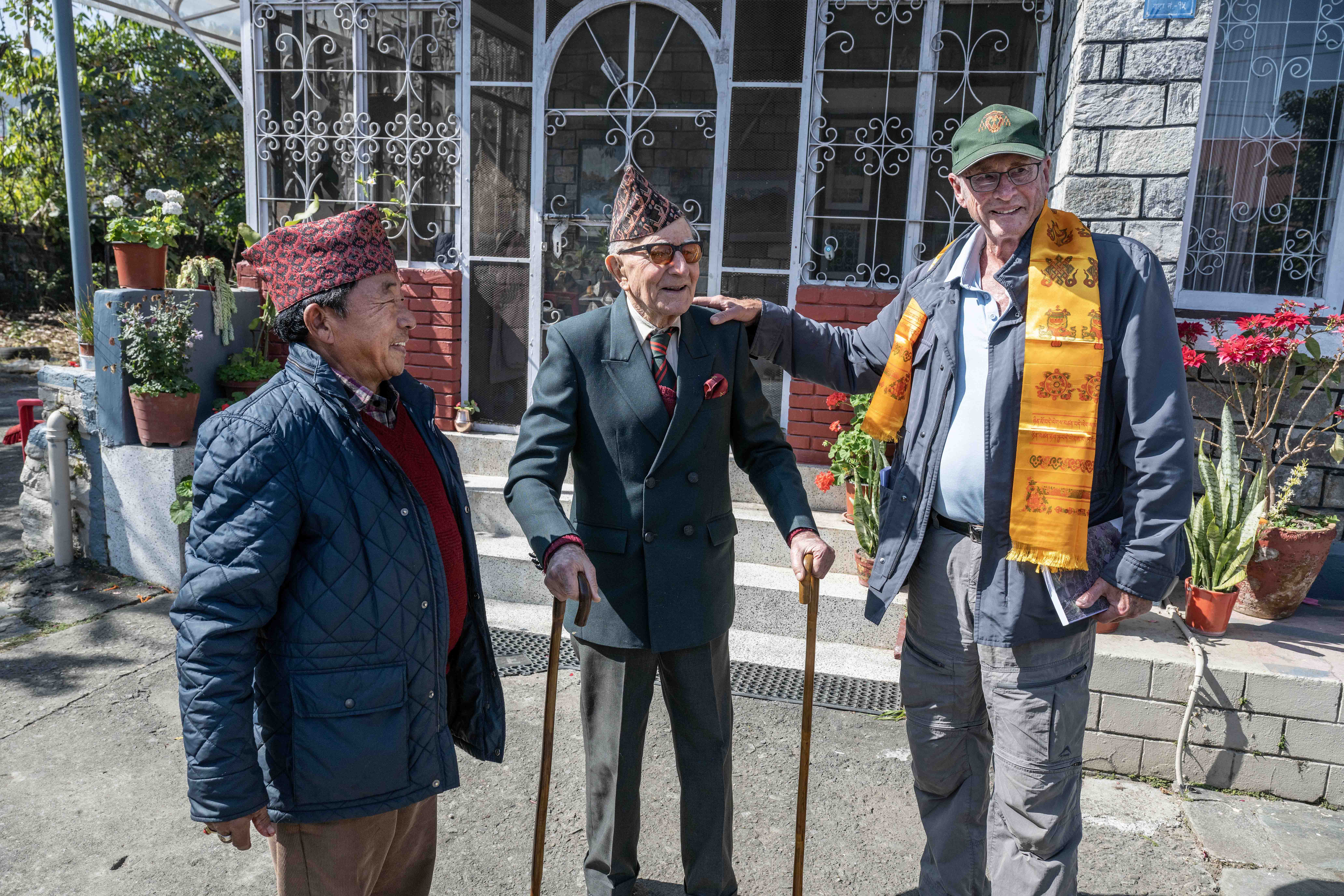
As my taxi arrives at his home on the outskirts of the Nepalese city of Pokhara, I am greeted by a true British Army legend. Dressed in a dark green double-breasted mufti jacket and sporting a Brigade of Gurkhas red and green striped tie is Lieutenant Colonel J.P. Cross, OBE. The retired officer is standing in his driveway using two walking sticks to support his frail frame. Sporting a traditional Nepali dhaka topi hat, he playfully salutes me before I have even stepped out of my silver 4×4 vehicle. After shaking my hand, he points to his large two-storey stone home and informs me: “I walk around this house 100 times every morning – that’s seven miles.” That is, in fact, one lap of his home for every year of his life. For Colonel Cross is 100-years-old and, despite being almost blind, his mind is incredibly sharp and he displays an astonishing memory for key dates and facts from his life.
As an admirer of the gallantry, professionalism and loyalty of the Gurkhas for many decades, I visited Colonel Cross because I wanted to know more about the famous warriors from the man who has worked with them for more than 80 years. I also wanted to learn more about his extraordinary life.
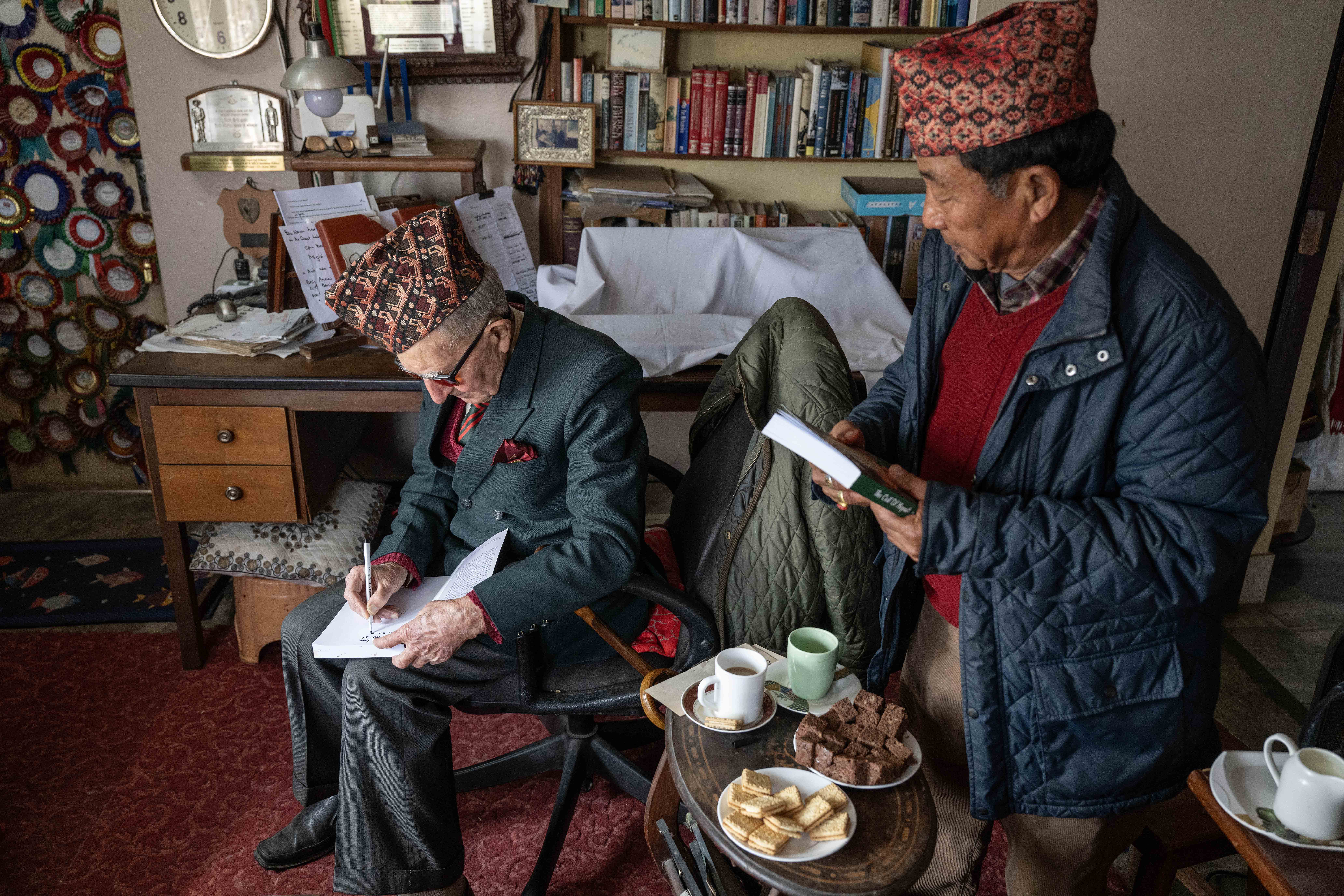
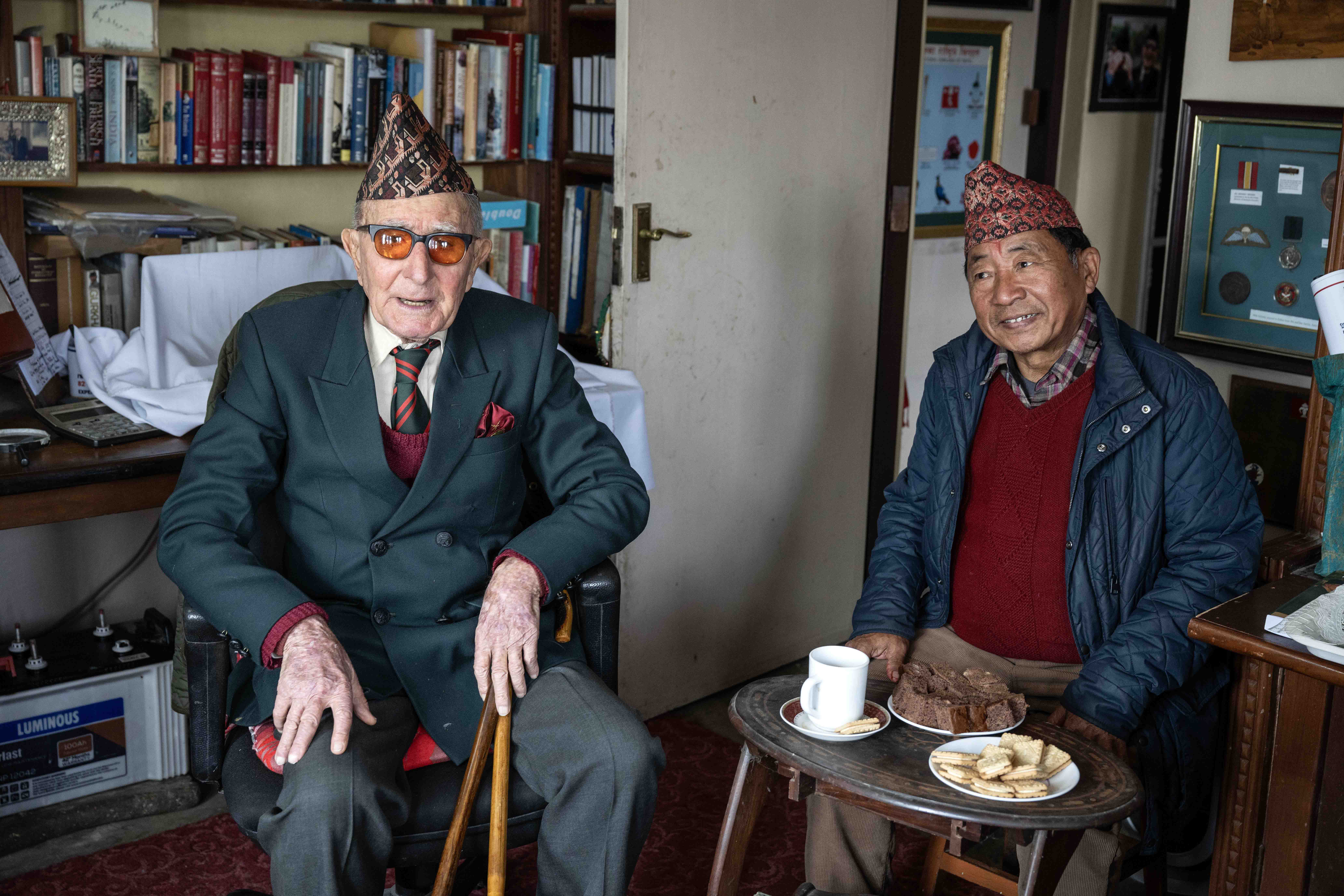
Even now, Colonel Cross is asked to give an annual lecture to the new Gurkha recruits before they fly from Nepal every February for nine months of infantry training in Catterick, North Yorkshire. The Brigade of Gurkhas, which has its recruiting centre in Pokhara, knows he is so well respected that the recruits will listen to his every word. “I began lecturing the new Gurkha recruits – both for the British Army and the Singapore Police – in 2002 and since then 8,119 young men have listened to what I have to say. I don’t really give the British Army recruits advice but I do tell them what to expect and how to conquer their fears,” he said. “I tell them how their Gurkha name is world famous and I stress the importance of the oath of loyalty that they have taken to serve the British monarch. I tell them I have served with 17 different armies and, by and large what I have seen of them all in war and in peace, one Gurkha is worth ten men from other armies. I tell them it’s up to them to uphold that tradition.”
Colonel Cross is looked upon as a grandfather figure by many recruits, aged between 18 and 21, who receive his words of wisdom before setting off on a journey to Britain which, for most of them, will be their first time abroad. “I received one letter that said, ‘Dear Grandfather, You told us about how our ancestors managed when they were Japanese prisoners of war. I thought of them when I found my training so hard that I wanted to give up. But I remembered your lectures and so I stayed on’.”
For more than 200 years, since the days of the East India Company, Gurkhas have played a part in the UK’s Armed Forces. The soldiers are known for their courage in combat as well as their loyalty, professionalism and determination. The motto of the brigade is “Better to die than be a coward,” while Gurkhas are also known for their lethal close-quarter battle weapon, the curved kukri knife which is up to 18 inches long. Their terrifying battle cry is “Ayo Gorkhali” – “the Gurkhas are here.” The Brigade of Gurkhas is the most oversubscribed element of the British Army and for its 2026 intake there were more than 10,000 initial applications for what resulted in just 323 places. That means a failure rate of 97%. The annual recruitment is so popular in Nepal because it provides a gateway to a wonderful career and a life-changing salary for the successful candidates. For their first year’s service, while they are being trained, the new recruits will earn more than £26,000 a year. This compares with a typical annual wage in the country of 900,000 Nepalese rupees, or £4,500.
John Philip Cross – widely and affectionately known as “JPX” – was born on June 21, 1925, in west London, one of four children. In 1943, he was conscripted into the British Army. Promoted to lance-corporal in the Oxfordshire and Buckinghamshire Light Infantry, he was chosen for officer training in India. His admiration for the Gurkhas began when he served alongside the soldiers from the 1st Gurkha Rifles at the end of the Burma Campaign in the Second World War and, later, in south-east Asia. He also witnessed the post-war counter-insurgency during the Malayan Emergency and the Borneo Confrontation. “The Gurkhas were remarkable because they seemed to be able to do far more than what was expected of them and for longer than anyone else,” Colonel Cross told me. In short, he considers them formidable soldiers both on and off the battlefield. Colonel Cross first went to Nepal in 1947 – the year of Indian independence – as one of two British officers a year who were invited to serve in the country. It took the two men ten days, by train and road, to get from the North West Frontier to Kathmandu, Nepal’s capital city. In contrast to the hostility that the British Army faced in India, there was an atmosphere in Nepal which he described as “pure peacefulness and happiness”. However, Colonel Cross was also struck by the level of poverty in the country.
During his 39-year-career in the British army, Colonel Cross served almost entirely in Asia. His role serving with the Gurkhas included being responsible for jungle warfare training and being a recruiting officer. He said he was deeply touched when some of the Gurkha soldiers under his command once told him, “Saheb [Sir], when we are with you, we feel no fear. When we are with you, we don’t get tired because you keep us happy.” With his failing eyesight and advancing years, he had to retire from active service in 1982, when he then hoped to settle in Nepal. Still a single man and with few ties to Britain, his heart had been captured by Nepal and its people. “Survival was the name of the game and so I wrote to the Birendra [the former king of Nepa] and he allowed me to become the first foreigner in Nepali history to be landowner and a house owner in Nepal.”
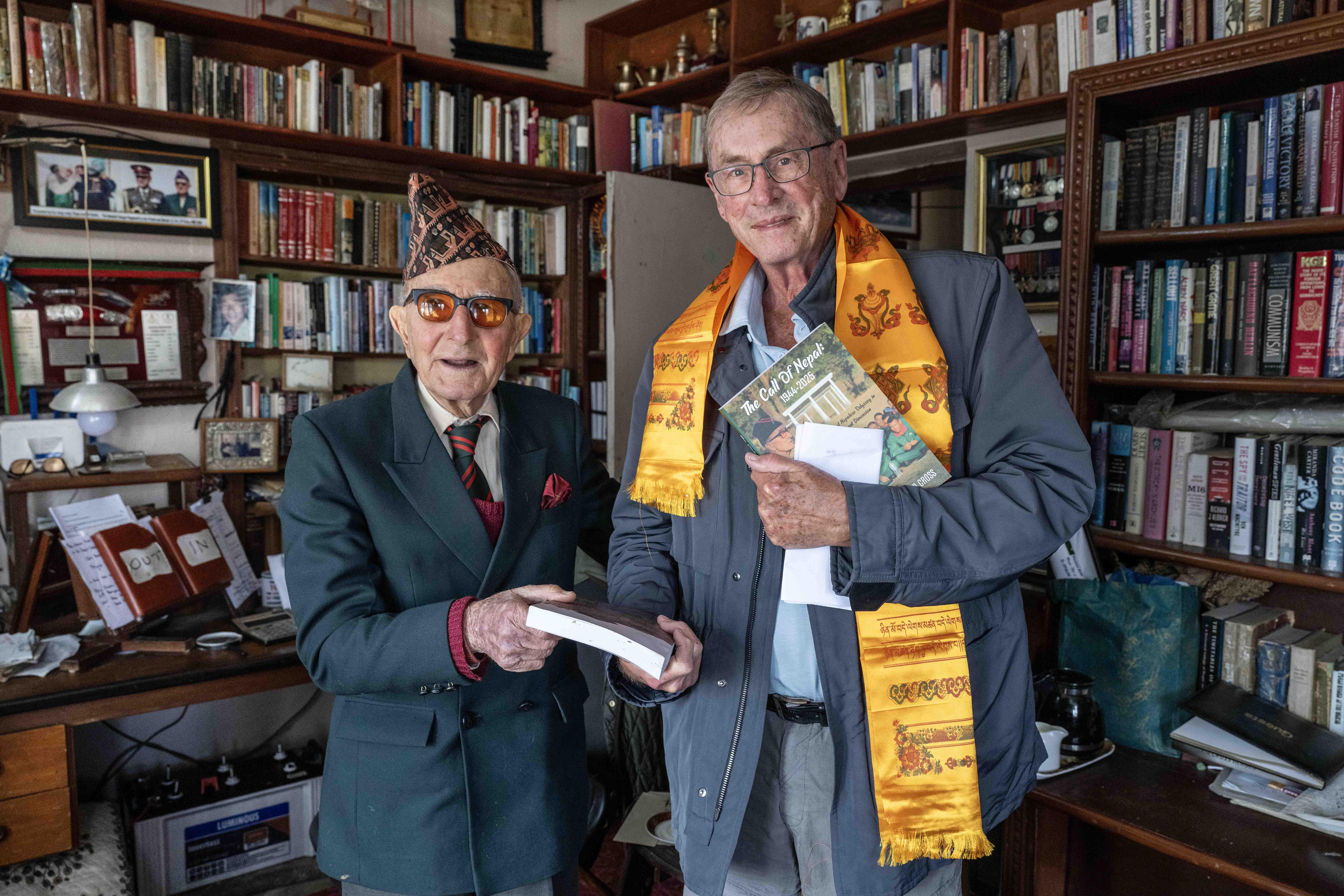
Later, in 2014, by then aged 89, Colonel Cross became a citizen of Nepal. He was only the second Briton, and first British man, to be granted Nepali citizenship, having to give up British citizenship to do so. After leaving the Army with a good pension, Colonel Cross embarked on a second career as a university lecturer and writer. He has penned 28 books and speaks nine Asian languages fluently, including Nepali. He has now lived in this land-locked country in south Asia for half a century. In his dotage, he is looked after by his devoted companion, Buddhiman Gurung, aged 70 whom Colonel Cross considers to be a surrogate son. In turn, he looks upon Buddhiman’s five children as his own grandchildren. As a centenarian with poor eyesight, his daily walk of seven miles takes him over three hours but he looks upon it as his “thinking time” as well as keeping him healthy.
Colonel Cross said: “I have lived in Nepal, first as a soldier, since February 29, 1976. I have found more love and happiness with my Nepali family and friends than I had ever thought possible. I am where I want to be with whom I want to be and that gives me good health and peace of mind.”
He was last in the UK in 2002 to promote one of his books but added: “At 100 years old, I don’t intend to go back again. I would be out of place there. I am in bed by 7pm every day and I get up at 4am. That timetable only works in one’s own house.” Colonel Cross added: “I have found out that people look at me in a way that I don’t look at myself. If they think what I have done is ‘unusual’ compared with their own life, that’s because they are looking at their life, not mine.”
The Colonel considers himself to be a Christian but he is also an honorary Hindu and an honorary Buddhist, the two main religions in Nepal. He also regards himself as an animist, a person who thinks that all natural things, such as a mountain or river, have a distinct spirit or soul. “So when I get to St Peter’s Gate [heaven], I hope he has a sense of humour!” he declared with a loud chuckle. “My desire is that, when the inevitable happens, I die in my bed in my sleep and then I will be cremated. When Buddhiman dies, I hope our ashes will be put together.”
As I drove away from Colonel Cross’s home – he saw me off with a broad smile and a cheery wave – I felt full of admiration for a unique, inspirational character who the Economist magazine once described as “one of those gifted, dedicated eccentrics that the British Army has the habit of spawning”.